팝업레이어 알림

팝업레이어 알림이 없습니다.
Sung Kyun Kwan University SAINT

Research Highlight

SAINT
SAINT

Prof. Jong Min Kim Leads Quantum Dot Display Breakthrough Published in Nature Electronics

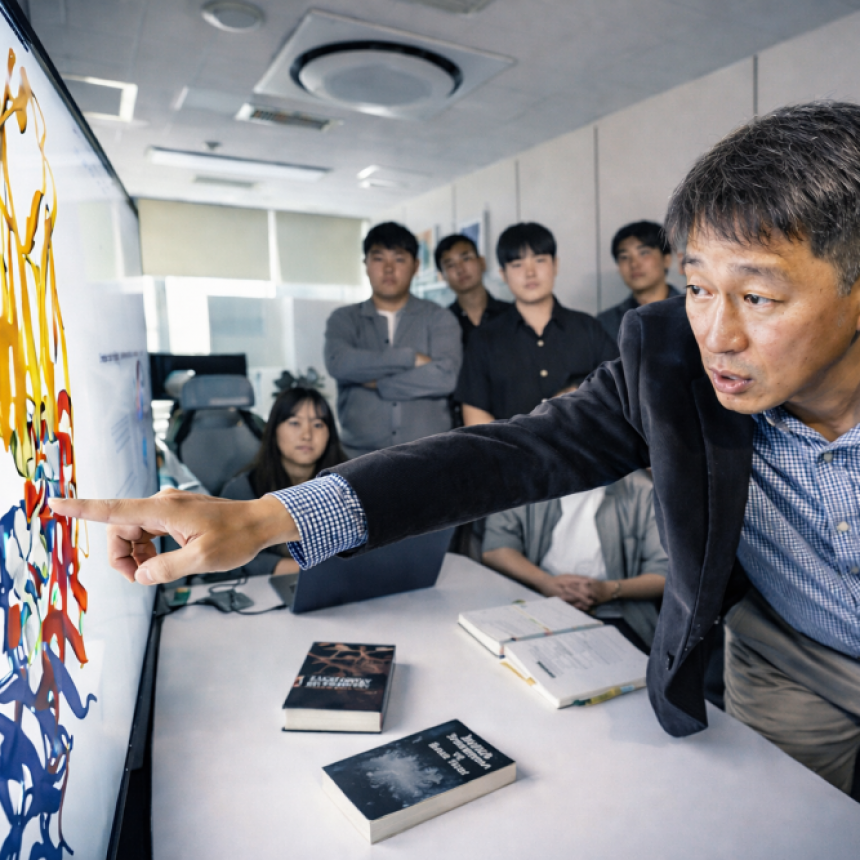
Professor Jong Min Kim of the University of Cambridge, who also serves as a Chair Professor at SAINT, has led a breakthrough in ultra-high-resolution quantum dot display technology. The research was published in Nature Electronics on July 17, 2026.The research team developed Cracking-Assisted Transfer Printing (CATP), an innovative technique that turns microscopic cracking—traditionally considered a limitation in quantum dot patterning—into a precisely controlled mechanism for transferring and patterning quantum dot pixels.Using CATP, the team successfully fabricated electroluminescent quantum dot pixels as small as 600 nanometers and achieved nanoscale patterns with a resolution of up to 16,933 pixels per inch (PPI). The technology also enabled uniform pixelization over areas of up to four inches and the fabrication of a cadmium-free, full-colour active-matrix quantum dot display.In addition to achieving ultra-high resolution, CATP improved electroluminescence performance through precise control of nanoscale interfaces and high quantum dot packing density, resulting in higher luminance and longer operational lifetime compared with conventional quantum dot patterning approaches.The breakthrough could provide a new pathway toward next-generation displays requiring extremely high pixel densities and wide colour gamuts, particularly for augmented reality (AR) and virtual reality (VR) applications.Professor Kim conceived and designed the research and supervised the project, bringing together researchers from the University of Cambridge and collaborating institutions.The study, “A cracking-assisted transfer printing technology for high-resolution quantum dot light-emitting diode displays,” was published in Nature Electronics.Read the full paper:Nature Electronics — DOI: 10.1038/s41928-026-01670-9

View more

SAINT and Thailand’s NANOTEC Open a New Chapter in Their Long-Standing Partnership

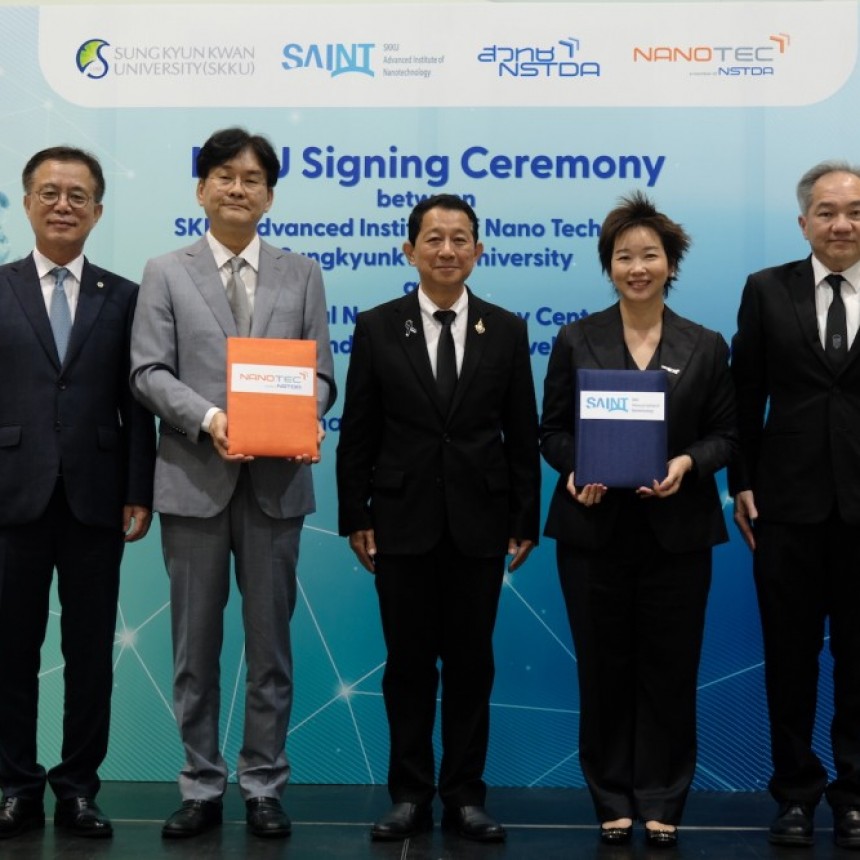
SAINT and Thailand’s National Nanotechnology Center (NANOTEC), under the National Science and Technology Development Agency (NSTDA), signed a Memorandum of Understanding (MOU) on July 8, 2026, at Thailand Science Park, marking a new chapter in their long-standing partnership. SAINT and NANOTEC have maintained a close relationship for many years, building strong ties through continued academic and research exchanges. The new MOU represents an important transition from this long-established relationship toward a broader and more strategic research partnership. Under the renewed framework, the two institutions will expand collaboration in key research areas including sensors and biosensors, advanced functional materials, sustainable energy technologies, environmental nanotechnology, and photonics. The partnership will also promote joint research projects, researcher exchanges, academic activities, and opportunities to pursue internationally funded collaborative programs. Building on years of mutual trust and cooperation, SAINT and NANOTEC aim to develop a more sustainable research and innovation network between Korea and Thailand and create new opportunities for collaboration in emerging fields of nanotechnology.

View more

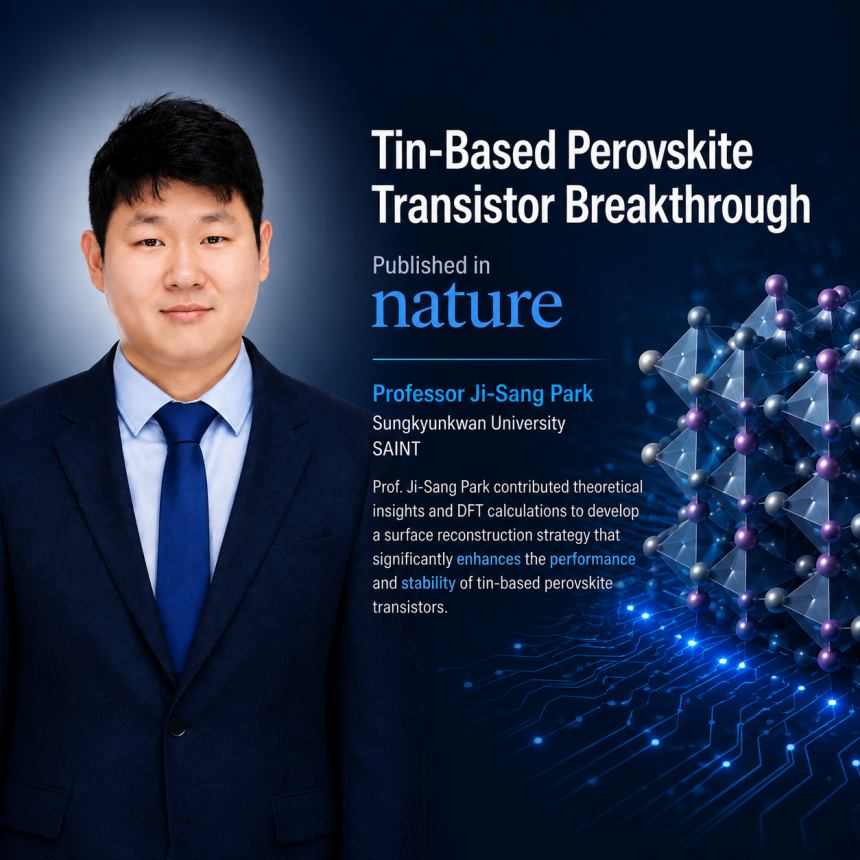
SAINT Prof. Jisang Park Contributes to Breakthrough in High-Performance, Air-Stable Perovskite Transistors

Professor Ji-sang Park of SAINT has contributed to a collaborative research breakthrough that significantly improves both the performance and stability of tin-based perovskite transistors. The findings were published in Nature.The research was led by Professor Yong-Young Noh’s team at POSTECH in collaboration with Professor Jisang Park’s team at Sungkyunkwan University and research teams led by Professors Ao Liu and Huihui Zhu at the University of Electronic Science and Technology of China (UESTC).Tin-based perovskites have attracted significant attention as promising materials for high-performance p-type transistors. However, their practical application has been limited by poor air stability: unreacted tin ions (Sn²⁺) on the material surface readily oxidize when exposed to air, creating defects that rapidly degrade device performance.To address this challenge, the researchers developed a “volatile surface reconstruction” strategy. By treating the surface of a cesium–tin–iodide semiconductor with potassium acetate, residual tin ions are converted into volatile tin acetate and removed from the surface. At the same time, potassium iodide forms naturally in the resulting vacancies, creating a protective layer against the external environment.The resulting p-type perovskite transistors achieved hole mobilities exceeding 50 cm²/V·s and on/off current ratios above 10⁸, representing world-leading device performance. The devices also demonstrated substantially improved stability, remaining operational for more than four hours in ambient air and maintaining their initial performance for over a month under accelerated aging conditions at 100°C.The breakthrough could open new possibilities for high-performance electronic technologies, including vertically stacked DRAM for AI computing, next-generation display driving circuits, wearable electronics, and highly integrated semiconductor devices.

View more

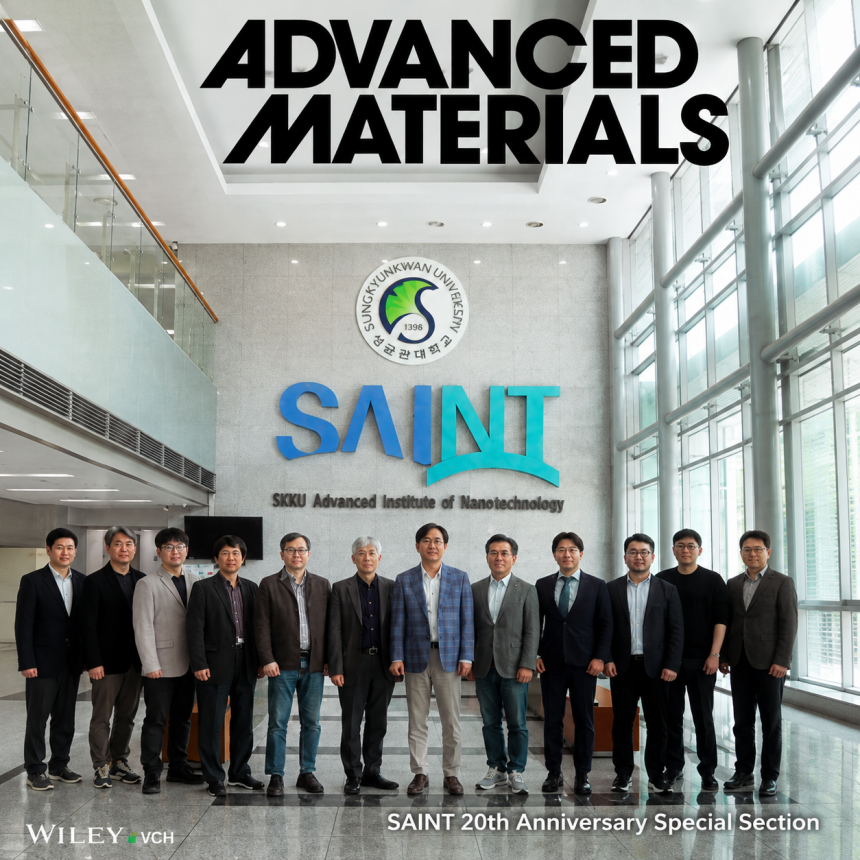
Three Special Issues in Leading Journals Celebrate SAINT’s 20th Anniversary

To celebrate its 20th anniversary, SAINT is collaborating with three leading international journals—Advanced Materials, ACS Nano, and Small—to highlight two decades of research excellence and innovation in nanoscience and nanotechnology.The special issues showcase SAINT’s research achievements and vision for the future, spanning advanced materials, nanoelectronics, energy, biotechnology, and other interdisciplinary fields.The upcoming Small special issue is being prepared with SAINT alumni from academia and industry, reflecting the strong research community and network built over the past 20 years.Together, the three special issues celebrate SAINT’s first 20 years and the beginning of its next chapter.

View more

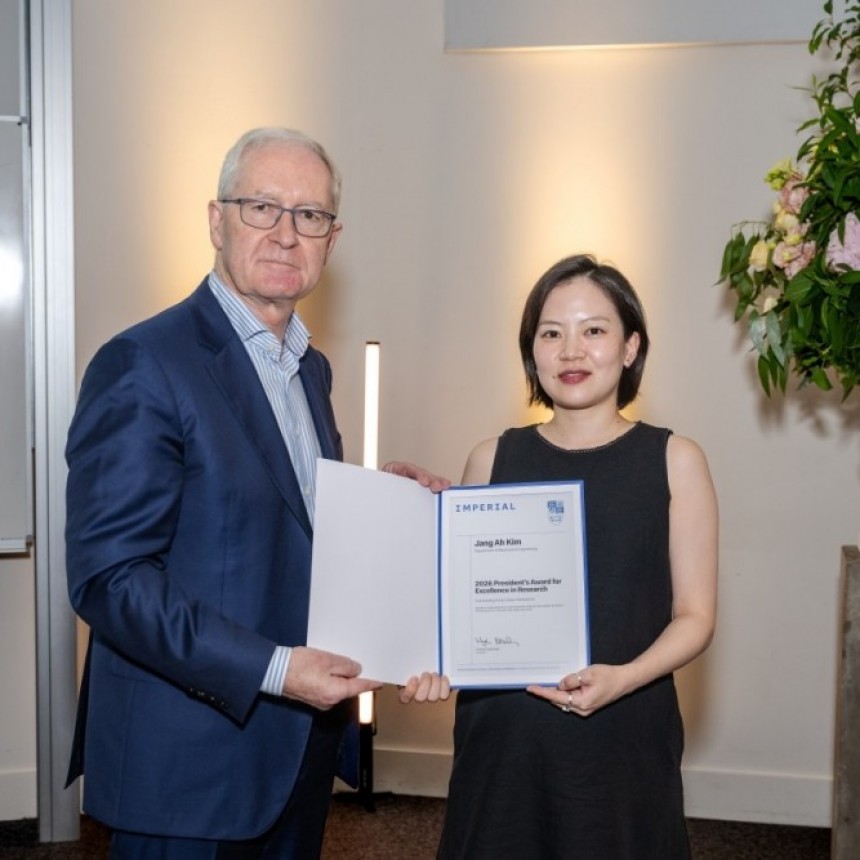
SAINT Alumni Prof.Jang-Ah Kim Receives Imperial College London President’s Award for Outstanding Early Career Researcher

Professor Jang-A Kim, an alumna of SAINT, has received the President’s Award for Outstanding Early Career Researcher at Imperial College London.Professor Kim earned her Ph.D. from SAINT in 2017 after completing her undergraduate studies in Mechanical Engineering at Sungkyunkwan University. She subsequently joined Imperial College London as a postdoctoral researcher and was appointed Assistant Professor in the Department of Mechanical Engineering in 2023.Based at the Hamlyn Centre for Robotic Surgery, Professor Kim leads the Micro-Nano Innovation Lab (mini lab), where her research explores innovative sensing and microrobotic technologies by integrating optics with micro- and nanotechnology. Her work bridges engineering and biomedical applications, contributing to advances in next-generation medical and robotic technologies.The President’s Award for Outstanding Early Career Researcher recognizes the achievements and potential of emerging researchers at Imperial College London. Professor Kim’s recognition highlights not only her research accomplishments but also her development of an independent research direction, collaborative approach, and contributions to the wider research community.Her achievement also represents the continued global impact of SAINT alumni, demonstrating how the research foundation developed at SAINT can lead to internationally recognized careers at leading research institutions.

View more

SKKU Secures 13.5 Billion WON for Brain Pool+ Initiative with Professor Il Jeon at the Core

SKKU has been selected for the 2026 Brain Pool+ Institutional Recruitment Program, securing KRW 13.5 billion in government funding over the next five years to strengthen its global research capabilities.Supported by the Ministry of Science and ICT and the National Research Foundation of Korea, the Brain Pool+ program enables universities to strategically recruit outstanding international scientists and provide comprehensive support for their long-term research activities in Korea. Funding can be used for researcher salaries, relocation and living expenses, as well as advanced research equipment and infrastructure.The initiative will focus on key national strategic technology areas, including next-generation energy, biomedical science, nanotechnology, and quantum materials. Five major research and international collaboration institutes at SKKU will work together: the Sungkyunkwan Advanced Institute of Nanotechnology (SAINT), BICS, NEM, SGRC, and PBRC.The program is led by SKKU President Yoo Ji-beom as principal investigator, while Professor Il Jeon of SAINT, who also serves as Deputy Vice President for International Affairs and Director of the Sungkyun Global Research Center (SGRC), takes a leading role in the strategic planning and operation of the initiative.Through Brain Pool+, SKKU aims to establish a sustainable platform for attracting distinguished scholars, established researchers, and emerging scientific talent from around the world. By creating an environment that supports long-term research and interdisciplinary collaboration, the university seeks to accelerate its development as a globally competitive research institution.

View more